Securing finance for a small to medium-sized business can feel daunting, not only because of the paperwork involved but also due to the complexity of Commercial Finance Broker requirements. In Australia, the rules are becoming more and more exacting with regard to the documents required.
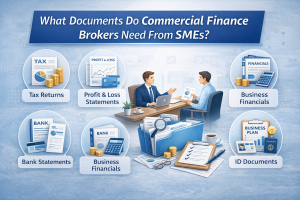
This blog helps to explain which documents are needed and the necessity of those documents.
Why SMEs Should Prepare Documents in Advance
When meeting with a Commercial Loan Broker, the aim is for the broker to help get the most favourable outcomes when presenting the business to lenders. To lenders, a business is assessed primarily through its documentation, history, and potential to repay the debt. Documentation is critical to a broker’s success, as unprepared applicants risk having their loan declined.
There is a direct relationship between documentation quality and the following:
- Loan process acceleration: Commercial Finance Brokers can more easily submit applications in the presence of supporting documentation.
- Enhanced credibility: Organised documentation is a reflection of an organised business.
- Improved negotiation position for the broker: The clearer your financial standing, the more likely the broker is to secure better rates and repayment terms.
In the financing process, less stress and smoother results come from better preparation.
Essential Business Documents Brokers Request
To verify your business structure and operations, all Commercial Finance Brokers request a minimum set of business information documents, which include:
● Business Registration Information
- Australian Business Number (ABN)
- Australian Company Number (ACN) or Australian Securities and Investments Commission (ASIC) registration
- Business name registration certificates
Your business name registration documents verify your business has legal recognition in Australia. Lenders also use these documents to verify your business identity.
● Ownership and Business Structure Documentation
- Partnership agreements and trust deeds (if applicable)
- Shareholder or stakeholder agreements
These documents outline who controls the business and how decisions are made, which is important for lenders regarding liability.
● Business Fiduciary Licences and Permits
These may be required based on your industry. For delays to be avoided, a food business licence is required for a restaurant, a builder’s licence is required for a construction company, etc.
Key Financial Records Required
Lenders assess your financial stability by reviewing your revenue and expenses. Financial documents, which are the foundation of any loan application, include:
● Financial Statements
- Profit & Loss Statements (last 3 years)
- Liabilities and Assets (Balance Sheets)
A Commercial Finance Broker utilises these to understand the operational efficacy and sustainability of the business.
● Tax Documents
- Business and personal tax returns (typically the previous 2–3 years)
- Business Activity Statements (BAS)
These show proof of financial activity as well as demonstrate compliance with the Australian Taxation Office.
● Bank Statements
Lenders typically ask for 3–6 months of business bank statements as part of their due diligence in evaluating the cash flow and spending habits of the business. Bank statements that are clean and show consistent activity make it easier for your Commercial Finance Broker to tell your financial story.
● Debt and Liability Overview
A summary of current loans/debts, leases, or credit facilities shows lenders your obligations. This helps your Commercial Finance Brokers balance the load of your new financing by managing payment obligations and associated risks.
Documents That Support Your Loan Purpose
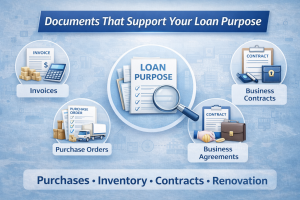
Supporting documents are typically dependent on the type of loan and show lenders the intended use of the funding.
They may include the following:
● Purchase of Assets
- Estimates, invoices, or purchase orders for the acquisition of equipment, vehicles, or machinery
- Depreciation schedules for purchasing used assets
This shows lenders the value and intended use of the purchase.
● Financing of Commercial Real Estate
- Contracts of the property or leases
- Valuation documents, or council approvals
These are necessary documents if you are acquiring, leasing, or refinancing commercial property.
● Loans Against Working Capital or For Business Expansion
- Business plans and growth projections
- Forecasts of cash flow
With this information, the lender is assured that you have a practical and effective way of using the funds.
Personal Information From Directors and Guarantors
Lenders require personal information even if your business is well established, especially in the Australian context of small and medium businesses.
● Personal Identification Documents
- Passports or driver’s licences
- Address verification.
This is to verify identity and reduce lender risk.
● Credit Score
Directors and guarantors have their personal credit scores assessed by lenders to determine the risk.
● Financial Statements/Tax Returns
In the case of chief directors, lenders may require their financial statements or tax returns to gauge the position and the risk the guarantors have.
When this information is provided in advance, a Commercial Finance Broker is able to deliver a well-rounded submission, increasing financing prospects.
Organised and structured documentation influences the outcome of financing and also accelerates the process.
How Organised Paperwork Helps Brokers Secure Better Terms
Frequent lender questions often lead to delays and slower approvals.
● Professional presentation of documents
Commercial Finance Brokers will communicate to financial institutions and lenders that your business has a structured and well-organised system.
● Fewer queries from lenders
When documentation is clear, fewer enquiries are needed, which speeds up approval.
● Improves loan conditions
Proven cash flow, assets, and compliance will open opportunities for decreased interest rates, increased loan ceilings, and extended repayment windows.
Consider creating a physical or digital folder for yourself to organise the documents that a broker may need, and that way, they can easily update the folder, and then you can ensure that nothing falls through the cracks and is missed in the submission process.
Conclusion
For SMEs, making the right call with Commercial Finance Brokers means obtaining the right loan for expansion, equipment, working capital, or property. With enough preparation, all the right calls become effortless. Securing the right loan can be hard and takes time. Even with the right documents, the process can still feel time-consuming. Instead of disorganised chaos, aim for organised preparation.
In Australia’s lending environment, organised documentation can be the difference between securing the right loan and missing valuable growth opportunities.
 :
https://argfinance.com.au/
:
https://argfinance.com.au/