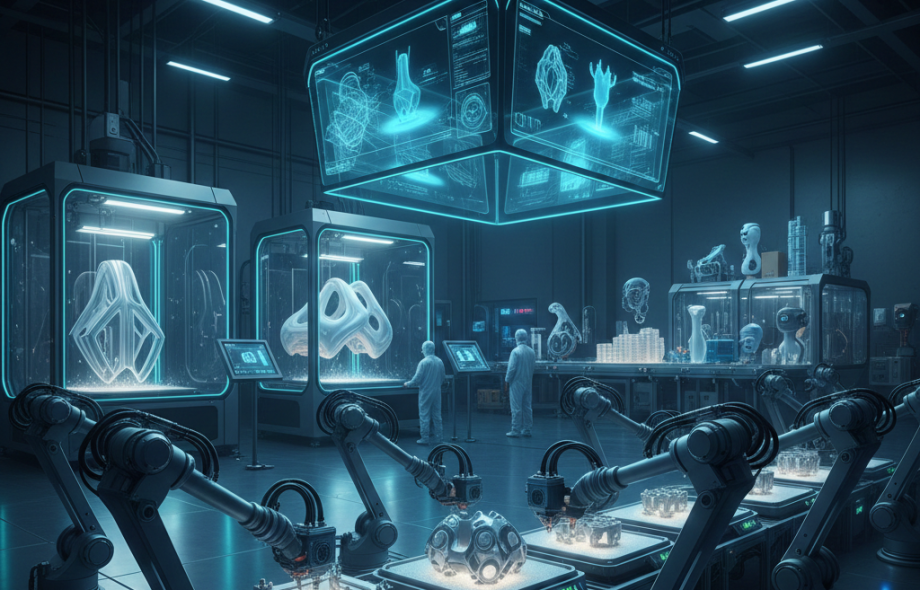
3D printing, also known as additive manufacturing, has been making waves in the world of tech and manufacturing industries. This innovative technology allows users to create three-dimensional objects by layering materials such as plastic, metal, or even food, based on a digital design. With its ability to rapidly produce customized products and parts, 3D printing is revolutionizing the way we think about manufacturing.
One of the key advantages of 3D printing is its ability to reduce waste and optimize production processes. Traditional manufacturing methods often involve cutting and molding materials, which can result in a significant amount of waste. In contrast, 3D printing is a more sustainable option, as it only uses the exact amount of material needed to create an object. This not only helps reduce costs but also minimizes the environmental impact of manufacturing.
Another benefit of 3D printing is its versatility. From creating prototypes for new products to producing custom medical implants, this technology has a wide range of applications across various industries. In the healthcare sector, 3D printing is being used to create prosthetic limbs, dental implants, and even living tissue for organ transplants. In the aerospace industry, engineers are utilizing 3D printing to produce lightweight and durable components for aircraft and spacecraft.
Furthermore, 3D printing is empowering individuals and small businesses to bring their ideas to life. With the right equipment and software, anyone can design and manufacture their own products from the comfort of their home or office. This democratization of manufacturing has the potential to spur innovation and creativity in ways we have never seen before.
As with any technology, there are challenges and limitations to consider. Issues such as material availability, printing speed, and accuracy still need to be addressed to fully realize the potential of 3D printing. However, ongoing research and development efforts are continuously improving these aspects and opening up new possibilities for the technology.
In conclusion, 3D printing is a game-changing technology that is reshaping the future of manufacturing. Its innovative approach to production, ability to create customized products, and wide range of applications make it a valuable tool for industries across the board. As the technology continues to evolve and improve, we can expect to see even more groundbreaking advancements in the world of 3D printing.
 :
https://www.pinterest.com/xceltec0192/
:
https://www.pinterest.com/xceltec0192/