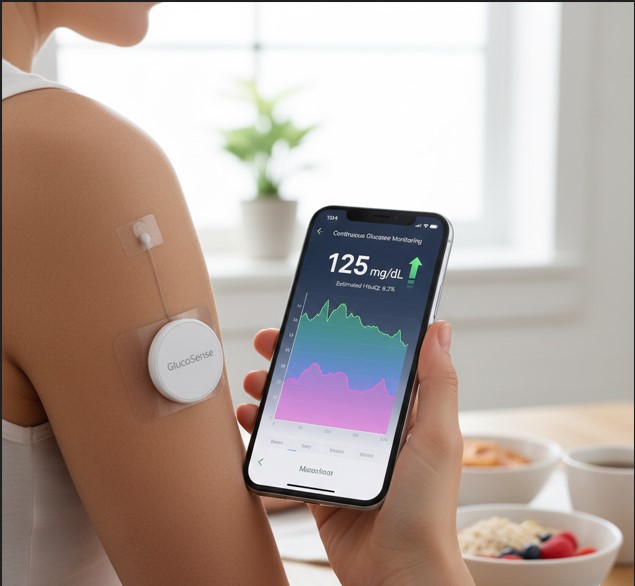
Living with diabetes often means testing your blood glucose levels several times a day. For years, this has meant painful and sometimes inconvenient finger-pricks. But thanks to advances in technology, you no longer have to endure these routine tests. With continuous glucose monitors (CGMs), you can now monitor blood glucose without pricking finger—and it’s changing the way people manage diabetes.
In this blog, we’ll explore how continuous glucose monitors work, how they eliminate the need for frequent finger pricks, and the key benefits of using these devices for better, more effective diabetes management.
What is a Continuous Glucose Monitor (CGM)?
A continuous glucose monitor (CGM) is a device that tracks your blood glucose levels throughout the day and night, without the need for finger-prick blood samples. It’s a small, wearable system that continuously measures glucose levels in the fluid just beneath your skin (interstitial fluid), rather than directly from the blood.
Here’s how it works:
Sensor: The sensor is inserted under the skin and measures glucose levels every few minutes, providing a constant stream of glucose data.
Transmitter: The transmitter attached to the sensor sends glucose readings wirelessly to a display device.
Receiver/Display Device: The data is shown on your mobile phone, smartwatch, or a separate reader, allowing you to see real-time changes in your glucose levels.
This means that, with a CGM, you can monitor blood glucose without pricking finger, which is not only more comfortable, but also more convenient.
How Does a CGM Help You Monitor Blood Glucose Without Pricking Finger?
Continuous Data for Better Insights
Traditional blood glucose meters provide a single reading at a specific point in time. While this gives you useful data, it doesn’t show how your glucose levels change throughout the day. Continuous glucose monitors, on the other hand, measure glucose levels every 5 to 10 minutes, providing you with a continuous stream of data. This allows you to track trends, see how your levels fluctuate after meals, exercise, or medication, and better understand your body’s response.
Real-Time Alerts
A significant advantage of continuous glucose monitors is their ability to send you real-time alerts if your glucose levels go above or below a set threshold. These alerts are highly customizable and can warn you when you’re at risk of hypoglycemia (low blood sugar) or hyperglycemia (high blood sugar). This feature is crucial for proactive management, as it allows you to take action before your glucose levels reach dangerous levels. Whether it’s eating a snack to raise your blood sugar or taking insulin to bring it down, a CGM helps you manage your diabetes in real time.
No More Finger Pricks
One of the main reasons people turn to CGMs is the ability to monitor blood glucose without pricking finger. While finger-prick tests are necessary for traditional glucose meters, they can be uncomfortable and disrupt your daily activities. With a CGM, the sensor is placed just under the skin, and it continuously measures your glucose levels without the need for additional finger pricks. This makes it far more convenient and pain-free, especially for individuals who need to check their blood glucose multiple times a day.
Improved Blood Glucose Control
Having a continuous stream of data at your fingertips allows you to make better decisions about your diabetes management. With a CGM, you can see how different factors—like food, exercise, and stress—affect your glucose levels. This helps you adjust your insulin doses, meal plans, or exercise routines to maintain more stable blood glucose levels. With more control over your glucose, you reduce the risk of complications associated with diabetes, such as kidney disease, neuropathy, and heart problems.
The Benefits of Monitoring Blood Glucose Without Pricking Finger
Increased Comfort
The constant need for finger pricks can become uncomfortable and burdensome, especially if you’re testing multiple times a day. Continuous glucose monitors eliminate this pain by providing constant, real-time glucose data. The sensor, which is typically worn on the abdomen or arm, is small, discreet, and comfortable. Once it’s in place, you can go about your day without needing to stop and perform a painful finger-prick test.
Reduced Risk of Hypoglycemia and Hyperglycemia
For individuals with diabetes, managing blood sugar levels within a safe range is crucial. Hypoglycemia (low blood sugar) and hyperglycemia (high blood sugar) can cause a range of symptoms, from dizziness and confusion to more severe complications like seizures or diabetic ketoacidosis (DKA). With a continuous glucose monitor, you’re alerted when your glucose goes outside the normal range. This gives you the chance to address issues before they escalate into an emergency.
Better Sleep
For many people with diabetes, managing blood glucose overnight can be especially challenging. CGMs allow you to monitor your glucose levels while you sleep, and many systems can alert you if your levels dip too low or rise too high during the night. This gives you peace of mind, knowing that you’re protected from overnight hypoglycemia or hyperglycemia without needing to wake up and perform a finger-prick test.
Improved A1C
A1C is an important measure of your average blood glucose over the last 2-3 months. Many people find that using a continuous glucose monitor helps improve their A1C levels by giving them a better understanding of their glucose patterns. By eliminating the guesswork and providing a continuous flow of data, a CGM helps people make more informed decisions about their diabetes care, leading to more consistent glucose control and a reduction in A1C over time.
Convenience and Lifestyle Integration
Managing diabetes doesn’t have to disrupt your daily routine. With a continuous glucose monitor, there’s no need to take time out of your day to prick your fingers, which makes diabetes management more seamless. You can check your glucose levels in real-time on your phone or smartwatch without stopping your activities, whether you’re working, exercising, or relaxing. This integration into your lifestyle makes diabetes management more manageable and less intrusive.
The Cost of Continuous Glucose Monitors and Insurance Coverage
While the cost of continuous glucose monitor systems may be higher than traditional glucose meters, the advantages they offer often make them worth the investment. The costs typically associated with CGMs include:
Sensors: These sensors need to be replaced every 7 to 14 days and typically cost between $35 and $100 per sensor.
Transmitter: The transmitter, which sends data from the sensor to your display device, lasts for several months and typically costs between $200 and $400.
Reader/Display Device: Some CGM systems come with a dedicated reader, while others transmit data to your smartphone or smartwatch. These devices can range from $50 to $300.
Fortunately, many insurance companies, including Medicare, cover the cost of continuous glucose monitor systems, especially for those with type 1 diabetes or insulin-dependent type 2 diabetes. If you’re considering using a CGM, be sure to check with your insurance provider to understand coverage options and eligibility.
Why Choose Linx CGM to Monitor Blood Glucose Without Pricking Finger?
The ability to monitor blood glucose without pricking finger is a game-changer in diabetes care. By using a continuous glucose monitor, you can improve your glucose control, avoid the discomfort of finger-prick tests, and gain more confidence in your ability to manage diabetes day-to-day.
At Linx CGM, we offer high-quality, reliable continuous glucose monitors that provide real-time insights into your blood glucose levels. Our CGMs are designed to make your life easier, more comfortable, and more effective in managing diabetes.
Visit us at https://linxcgm.com
to learn more about how we can help you monitor blood glucose without pricking finger and improve your diabetes management.
 :
https://linxcgm.com/products/linx-cgm-monitor
:
https://linxcgm.com/products/linx-cgm-monitor