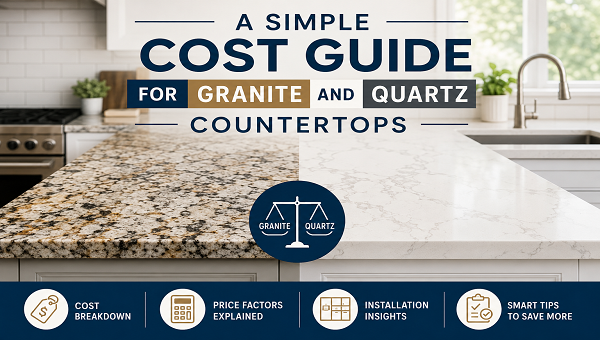
When I plan a kitchen or bathroom upgrade, I always look at the countertop first. It changes the whole feel of the room, and it also affects the final budget. However, many homeowners feel confused when they compare granite and quartz. Both look beautiful, but their prices can change based on material quality, slab size, edge style, labor, and the layout of the space.
If I want a natural stone look, I usually start by checking the cost of granite countertops, since granite comes in many price ranges. Some slabs cost less, while rare colors and patterns cost more. Therefore, it helps to understand what affects the price before choosing a slab.
Also, when I compare granite and quartz countertop cost, I do not only look at the price per square foot. I also think about installation, sink cutouts, seams, backsplash pieces, edge profiles, and long-term care. Because of that, the cheapest material is not always the best value.
In places like Milwaukee, homeowners often choose granite or quartz because both materials can handle daily kitchen use. However, the right choice depends on budget, design taste, and how much maintenance someone wants.
Key Takeaways
- Granite usually gives a natural stone look with unique patterns, but the price can change a lot by slab type.
- Quartz often costs more in some styles, but it offers low maintenance and a clean, modern look.
- The final countertop cost depends on material, labor, layout, edge style, cutouts, and extra design details.
What Makes Granite and Quartz Prices Different?
When I compare granite and quartz, I first look at how each material gets made. Granite comes from natural stone. Workers cut it from large blocks, polish it, and turn it into slabs. Therefore, every granite slab has its own colors, veins, and patterns. This natural beauty can raise the price, especially when the stone has rare movement or color.
Quartz, however, comes from engineered stone. It contains natural quartz mixed with resins and pigments. As a result, quartz has a more controlled look. Many people like this because the pattern feels clean and even. Also, quartz does not need sealing like granite, which can make it easier to care for.
Still, both materials can fit different budgets. Basic granite may cost less than premium quartz. However, high-end granite can cost more than many quartz options. Because of that, I always compare exact slab choices instead of judging by material name only.
Average Granite and Quartz Countertop Cost
When I talk about countertop pricing, I like to explain it in a simple way. Most countertop projects use a price per square foot. This price may include the slab, fabrication, and installation, but not always. Therefore, I always check what the quote includes.
Granite often falls into a wide price range because the stone can be common or rare. A basic granite slab may work well for a budget-friendly kitchen. However, exotic granite with dramatic colors can cost much more. In addition, thicker slabs and special finishes can increase the total price.
Quartz also has different price levels. Simple quartz colors can feel affordable, while designer patterns may cost more. For example, quartz that looks like marble often comes at a higher price because many homeowners want that soft and elegant style.
If I want a clean estimate, I measure the countertop area first. Then, I add extra costs for cutouts, edges, corners, and backsplash pieces. This gives me a better idea of the real budget.
Granite Countertop Cost Factors
Granite price changes for several reasons. First, the stone type matters. Common colors usually cost less because suppliers can find them more easily. However, rare granite with bold veining or unusual color may cost more.
Second, slab thickness affects the price. A thicker slab often feels stronger and richer. However, it may also increase material and labor costs. Because of that, I compare both appearance and function before making a choice.
Third, the layout can affect the final number. A simple straight countertop usually costs less to fabricate. However, a kitchen with many corners, angles, seams, or cutouts needs more work. As a result, labor costs can rise.
Also, edge style matters. A simple eased edge usually costs less. However, a decorative edge, such as ogee or waterfall-style detailing, adds more labor. Therefore, I choose an edge that matches the design without hurting the budget too much.
Finally, sealing may add to long-term care. Granite usually needs sealing from time to time. Still, many homeowners accept this because they love the natural look.
Quartz Countertop Cost Factors
Quartz pricing depends on brand, color, pattern, thickness, and installation needs. Also, some quartz styles look simple, while others copy marble or natural stone. The more detailed designs often cost more.
When I compare the cost of Quartz countertops, I look at how the surface fits my daily routine. Quartz works well for busy kitchens because it resists stains and does not need sealing. Therefore, it can save time over the years.
However, quartz still needs proper care. I do not place very hot pans directly on it because heat can damage the resin. Also, I clean spills quickly, even though quartz handles stains well. These small habits help protect the surface for a long time.
In Milwaukee, many homeowners like quartz for modern kitchens because it gives a smooth and consistent look. Also, quartz works well with white cabinets, shaker cabinets, dark cabinets, and simple tile backsplashes. Because of that, it fits many design styles.
Installation Costs Can Change the Final Budget
Countertop installation can make a big difference in the total cost. Even if the slab price looks fair, the final quote may rise after fabrication and installation. Therefore, I always ask for a full estimate.
Fabrication includes cutting the slab, polishing the edges, making sink cutouts, and preparing seams. This step needs skill because a small mistake can affect the look and fit. As a result, experienced fabricators may charge more, but they often give better results.
Installation also includes carrying heavy slabs, placing them correctly, leveling them, and securing them. Because granite and quartz slabs are heavy, the job needs proper tools and care. I never treat installation as a small part of the project because it protects the whole investment.
Also, old countertop removal can add to the cost. If the installer needs to remove existing counters, disconnect sinks, or adjust cabinets, the project may cost more. Therefore, I check these details early.
Kitchen Size and Layout Matter
A small kitchen usually costs less because it needs fewer square feet of material. However, the layout still matters. A small kitchen with many corners can cost more than a simple larger layout. Because of that, square footage tells only part of the story.
For example, an island adds more material. It may also need a larger slab with fewer seams. Also, if the island has a sink or cooktop, the fabricator must make extra cutouts. As a result, the cost can rise.
A bathroom vanity usually costs less than a full kitchen counter. However, special edges, backsplashes, and sink cutouts can still increase the price. Therefore, I never guess the cost without checking the details.
If I want to control the budget, I keep the layout simple. Also, I avoid too many custom shapes. This helps reduce waste and labor.
Granite vs Quartz: Which Gives Better Value?
The better value depends on what I need from the countertop. If I want a one-of-a-kind natural stone look, granite can offer great value. Every slab looks different, and that makes the kitchen feel special. Also, granite handles heat better than quartz in many daily situations.
However, if I want low maintenance, quartz may feel like the better choice. It does not need sealing, and it has a smooth, even pattern. Therefore, quartz works well for busy families and homeowners who want easy cleaning.
Granite may suit people who enjoy natural materials. Quartz may suit people who like a cleaner and more controlled design. Also, both can increase the beauty of a kitchen when installed well.
In Milwaukee, the best value often depends on the home style, cabinet color, and how the kitchen gets used every day. Therefore, I would not choose only by price. I would choose by cost, care, design, and long-term comfort.
Extra Costs Homeowners Should Remember
When I plan a countertop budget, I also think about the small extras. These costs can surprise homeowners if they only focus on slab pricing.
For example, sink cutouts usually add to the cost. A simple drop-in sink may cost less to cut than an undermount sink. However, many homeowners prefer undermount sinks because they look clean and make wiping crumbs easier.
Also, backsplash pieces can increase the price. Some people choose a short matching stone backsplash. Others choose tile instead. Therefore, this choice can change the final budget.
Plumbing work can also add cost. After countertop installation, a plumber may need to reconnect the sink, faucet, or garbage disposal. Because of that, I include plumbing in my planning.
Cabinet support matters too. If cabinets are weak, uneven, or damaged, they may need repair first. Otherwise, the new countertop may not sit properly. As a result, checking the base cabinets early can prevent problems later.
How I Would Plan a Smart Countertop Budget
I would start by setting a clear budget range. Then, I would measure the countertop area and decide which material fits my style. After that, I would compare granite and quartz samples in person because photos do not always show the real color.
Next, I would ask what the quote includes. Some quotes include material, fabrication, delivery, and installation. However, others may separate these items. Therefore, I would ask for a detailed price so I can compare fairly.
Also, I would leave extra room in the budget. A small cushion helps if I need extra cutouts, cabinet adjustments, or plumbing work. This makes the project less stressful.
Finally, I would think about long-term use. A countertop should look good, but it should also match daily habits. If I cook often, clean often, and use the kitchen heavily, I want a surface that handles real life well.
Simple Tips to Save Money on Countertops
If I want to save money, I start with common colors. Popular granite and quartz colors often cost less than rare or high-end styles. Also, simple patterns can still look beautiful when paired with the right cabinets and backsplash.
I also keep the edge simple. A basic edge can look clean and modern without adding extra labor costs. However, if the kitchen has a luxury style, a more detailed edge may still make sense.
Another smart tip is to avoid too many seams and cutouts. A simple design often costs less because it takes less time to fabricate. Also, it creates a cleaner final look.
In addition, I would compare a few options from the same supplier or fabricator. Sometimes one slab gives a similar look at a lower price. Therefore, asking for alternatives can help keep the project within budget.
Final Thoughts
Granite and quartz can both make a kitchen or bathroom look fresh, clean, and valuable. However, the final cost depends on more than the material name. Slab quality, design, layout, labor, edge style, cutouts, and extra services all affect the final number.
When I compare granite and quartz countertop cost, I focus on real value. Granite gives natural beauty and unique patterns. Quartz gives easy care and a smooth, modern look. Therefore, the best choice depends on lifestyle, budget, and design goals.
If I had to choose, I would not rush the decision. I would look at samples, compare full quotes, and think about how the countertop will feel during daily use. As a result, I can choose a surface that looks great and works well for years.
FAQs
1. Is granite cheaper than quartz?
Granite can be cheaper than quartz in some cases, especially when I choose a common granite color. However, rare granite can cost more than many quartz options. Therefore, I always compare exact slabs and full installation quotes.
2. Does quartz need sealing?
No, quartz does not need sealing. It has a non-porous surface, so it handles stains well. However, I still clean spills quickly and avoid placing very hot pans directly on it.
3. Does granite need more maintenance?
Granite needs more care than quartz because it usually needs sealing. However, sealing is not hard when done on schedule. Also, many homeowners feel the natural beauty makes the extra care worth it.
4. What raises countertop installation cost?
Cutouts, seams, edge styles, backsplash pieces, old countertop removal, and plumbing work can raise the cost. Also, complex layouts may need more labor. Therefore, I always ask for a detailed estimate.
5. Which countertop is better for a busy kitchen?
Quartz works well for a busy kitchen because it needs less maintenance. However, granite also performs well when sealed properly. Therefore, the better choice depends on how much care I want and which look I prefer.
 :
https://www.pinterest.com/badgergranitecom/
:
https://www.pinterest.com/badgergranitecom/